A casting method gets chosen at the quotation stage, and it fixes much of what follows: tooling cost, machining allowance, the alloys you can pour and the way the blank is heat treated. For housings, flanges, rings and gear rims, the choice usually comes down to batch size, weight and wall thickness. Here is how we look at it when a drawing arrives.
Start with quantity and tooling
Every process has a different entry price. A one-off or a batch of a few pieces rarely justifies a metal die, so sand moulds win by default. A pattern in wood or resin is cheap and quick to change. Once the same part repeats month after month, a permanent mould or a lost-foam pattern line begins to pay back, because moulding time per piece drops and the blanks come out closer to size.
Break-even depends on the part, so we do not quote a fixed number of pieces. Send the expected annual quantity along with the drawing. A part needed at 20 pieces a year and one needed at 2,000 a year are usually cast by different methods.
Sand moulds: chemically bonded and green sand
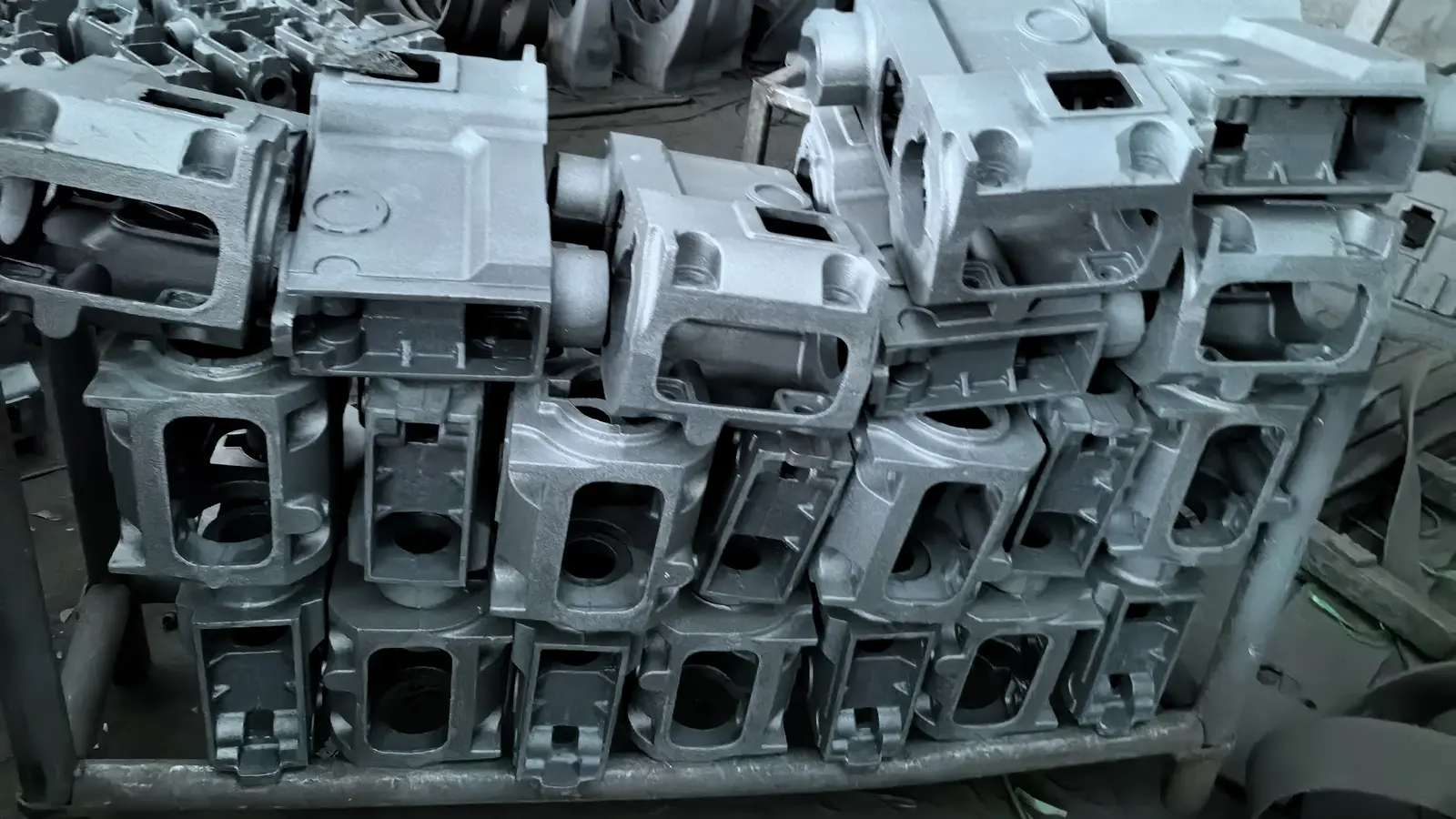
Sand covers the widest range of jobs. We pour into chemically bonded sand (a binder cures the mould, which gives good rigidity and a cleaner surface) and into green sand, a mix of sand and clay. Steel and iron castings from 0.5 to 2000 kg are possible, and sand is the usual choice for the heavy end of that range, as well as for complex geometry with inner cavities made with cores.
Sand costs you in surface finish and dimensional spread. A sand casting leaves the mould with a rough skin and wider variation than a part from a metal mould, so the drawing needs a machining allowance on every surface that will be cut. Leave it too thin and the tool meets scale and hard skin, or a pocket of porosity just below the surface. Leave it too thick and you pay for chips. How much depends on casting size, alloy and method; large castings need more.
Permanent mould and lost foam
A permanent mould, or chill mould, is a reusable metal die. Metal cools faster in it than in sand, the grain structure is finer and the dimensions repeat well from piece to piece. The tooling is expensive and the casting has to be shaped so it can be removed from the die, so this route suits series of simple to medium parts.
Lost foam works differently. A foam pattern stays in the sand and vaporises as the metal enters. There are no parting lines and no cores for many shapes, which helps with complex outer geometry in series. The pattern is consumed on every pour, so foam quality and pattern drying control the result.
Investment casting and pressure die casting are also common in industry, but for other tasks: small precision parts in the first case, large volumes of thin-walled non-ferrous parts in the second. We run aluminium and zinc die casting as a separate line; this article is about steel and iron castings.
Alloy, heat treatment, machining
The alloy limits the method as much as the geometry does. We cast carbon and alloy steel, and grey, ductile and malleable iron. In practice:
- Grey iron suits housings, bed frames and covers: it pours well, damps vibration and machines easily.
- Ductile iron, with spheroidal graphite, gives higher strength and toughness where grey iron is too brittle.
- Malleable iron is chosen for thin-walled parts that take impact.
- Carbon and alloy steel go into parts loaded in tension, shock or wear, such as gear rims and rings. Steel shrinks noticeably more than grey iron as it cools, so gating and risers need more care.
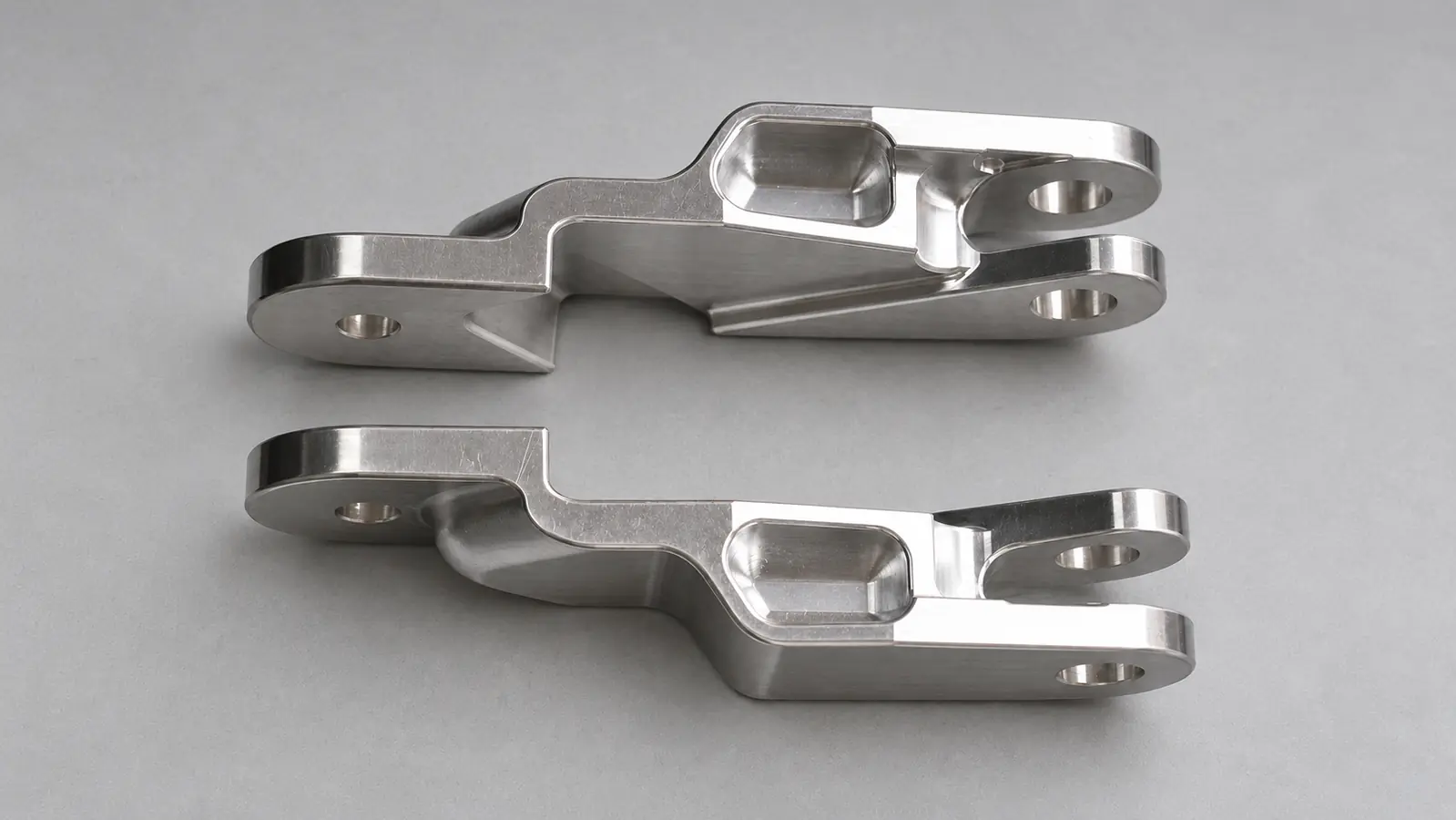
After pouring, blanks are annealed or normalised to relieve casting stresses. Parts that need hardness and strength are quenched and tempered, and hardness is checked to HB or HRC as the drawing requires. Then the casting goes onto our CNC machines, where we cut mating surfaces and final sizes to the drawing. Machining also exposes hidden defects. A pore found on the first roughing pass costs a blank; found after assembly, it costs a lot more.
What to include in your request
- Drawing, 3D model or a sample part, and the alloy or the working conditions
- Casting weight and the thinnest wall
- Quantity per order and per year, and whether the part will repeat
- Heat treatment and hardness required
- Which surfaces are machined and which stay as cast
Send the details through the contact page and we will suggest a method and an alloy.