Forging of steel billets
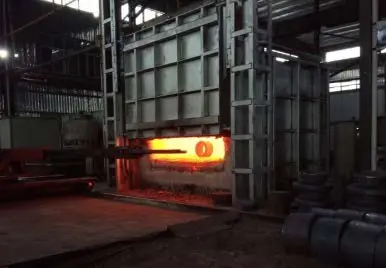
Open-die and closed-die hot forging of shafts, flanges, rings and discs. We consolidate the metal structure and raise strength and fatigue resistance – followed by heat treatment and CNC machining to drawing tolerances.
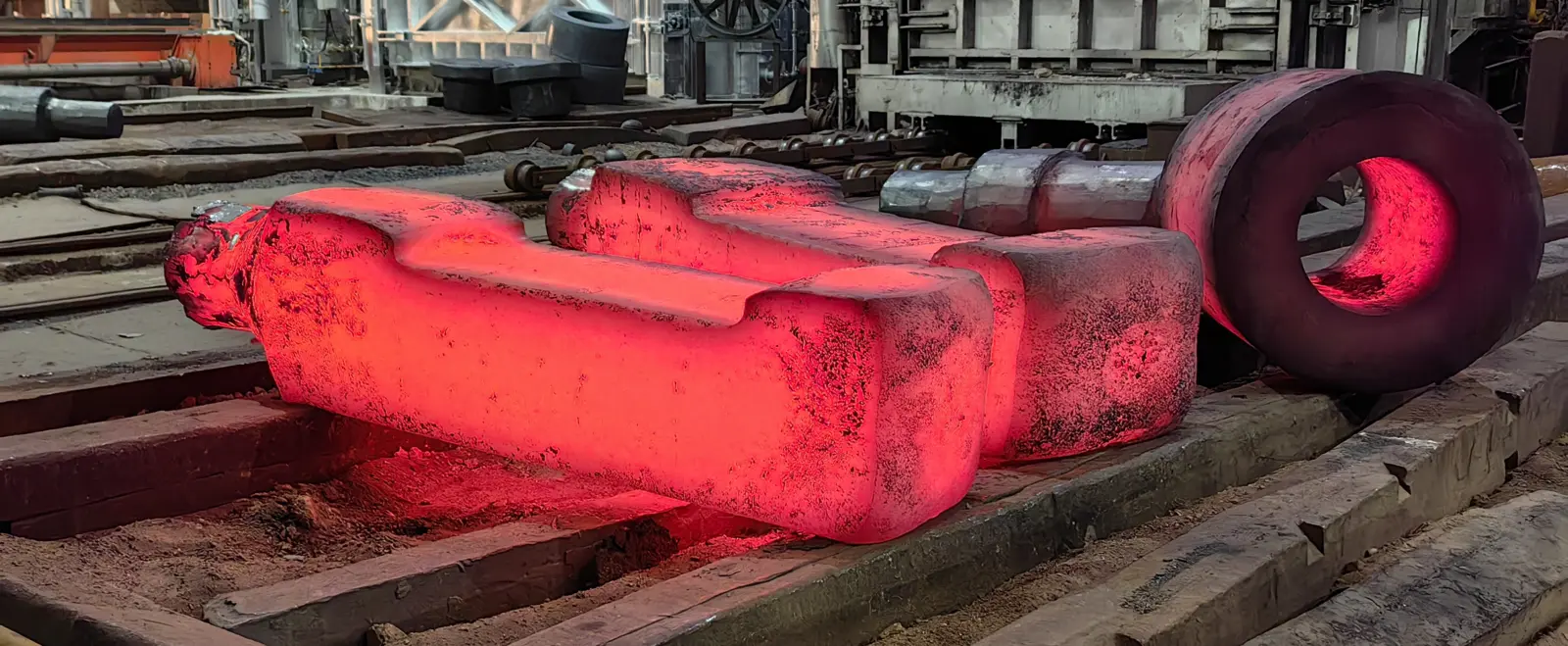
Types of forging
We match the technology to the job – from one-off large open-die forgings to series die-forged blanks with minimal machining allowances.
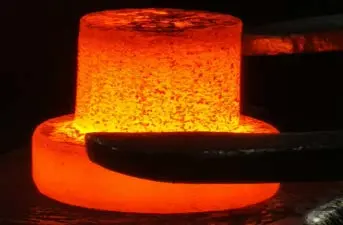
Open-die forging
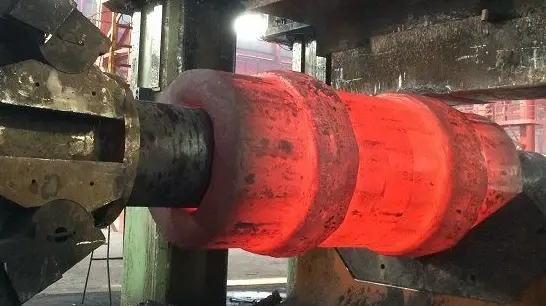
Closed-die hot forging
What we forge
Forgings for load-bearing assemblies and transmissions – from short flanges to shafts several metres long. Shape, allowances and material grade are agreed against the customer's drawing.
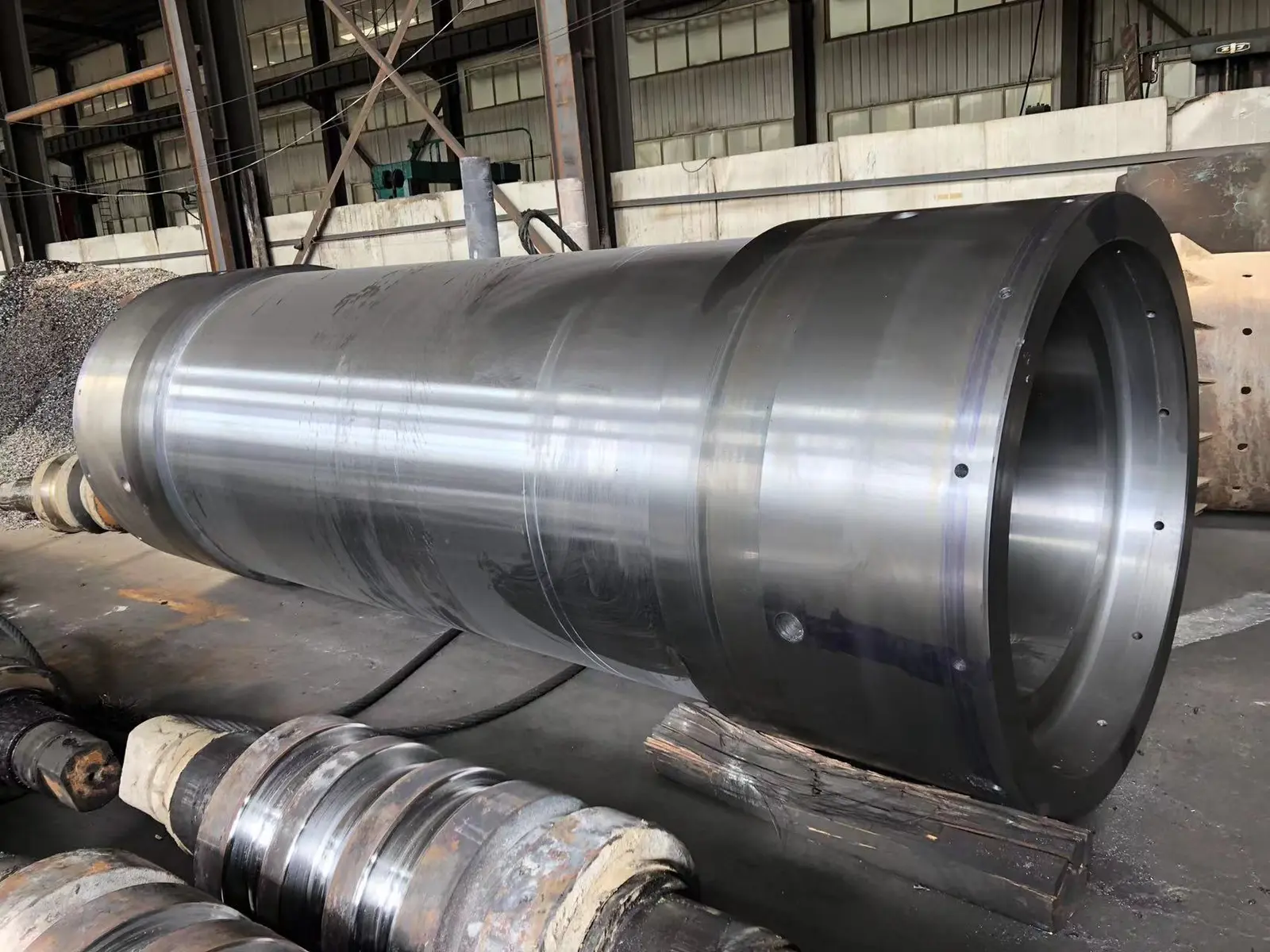
Materials and heat treatment
We forge from structural and alloy steels. After forging, the parts are quenched and tempered to relieve internal stresses and to set the required hardness and strength.
Advantages of forged parts
Forging deforms the metal in a controlled direction, eliminates casting defects and forms a grain flow that follows the part contour – which is why forged blanks are stronger and more reliable in loaded assemblies.
01Dense structure
Porosity and shrinkage cavities typical of casting are eliminated.
02Grain flow along the contour
Higher strength and impact toughness.
03Fatigue resistance
Service life under cyclic loading.
04Material savings
The forging shape is brought close to the finished part.
Send us your drawing – we will quote your forging
DXF, STEP, PDF or a photo with dimensions. Reply within 1 working day.