Die casting of aluminium, zinc and magnesium
We cast housings, covers, radiators, brackets and impellers in aluminium, zinc and magnesium alloys. Accuracy ±0.1–0.3 mm, wall thickness from 0.5 mm. We design and build the die in-house, then take the casting through to an assembly-ready part: machining, heat treatment, coating.
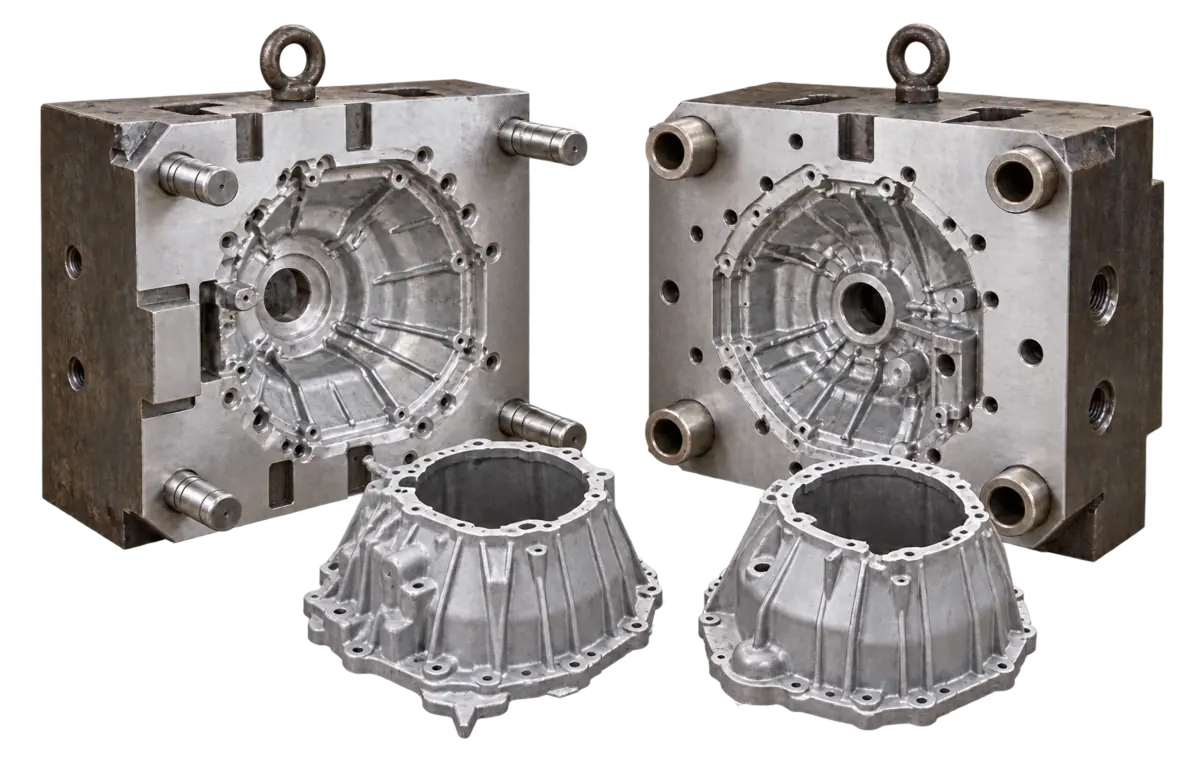
Die casting methods
Molten metal fills a steel die under high pressure and solidifies within seconds. This gives accurate, thin-walled parts in large batches. We choose the method by alloy and batch size.
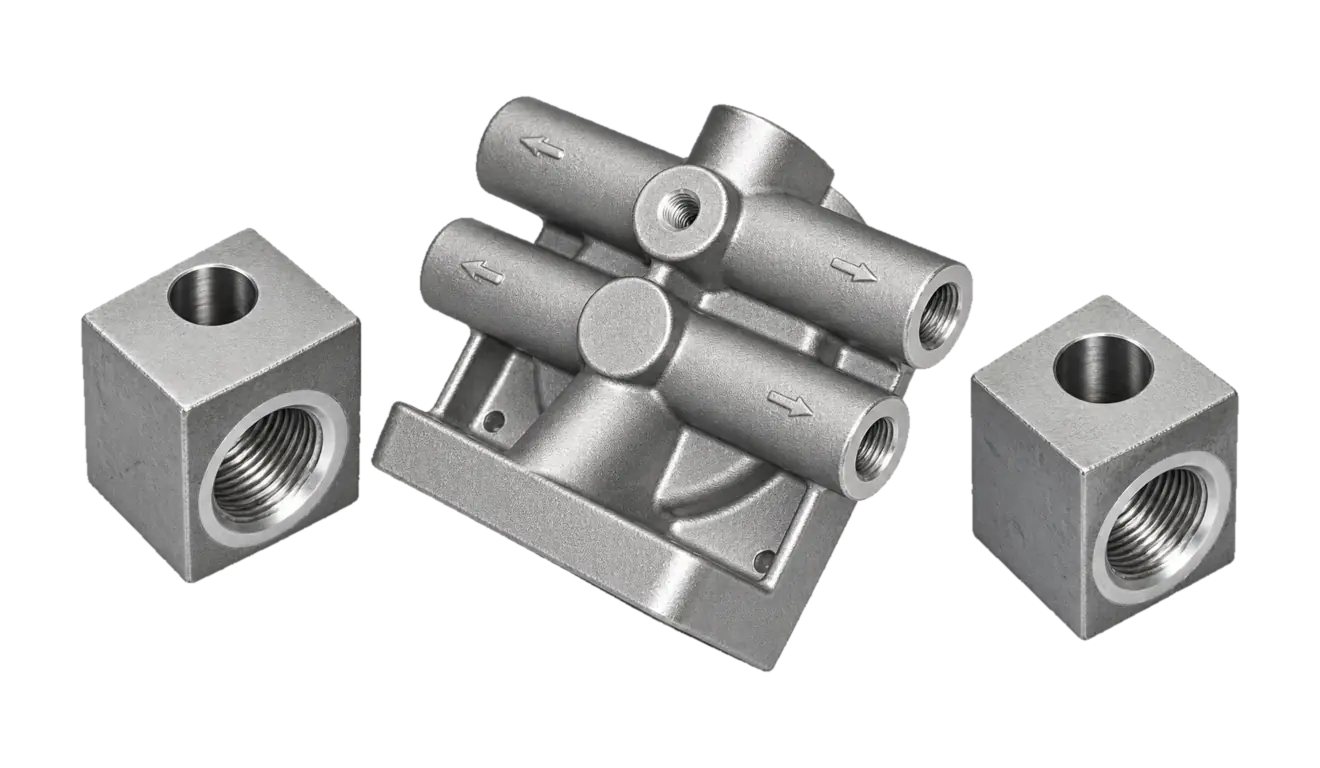
Cold-chamber die casting
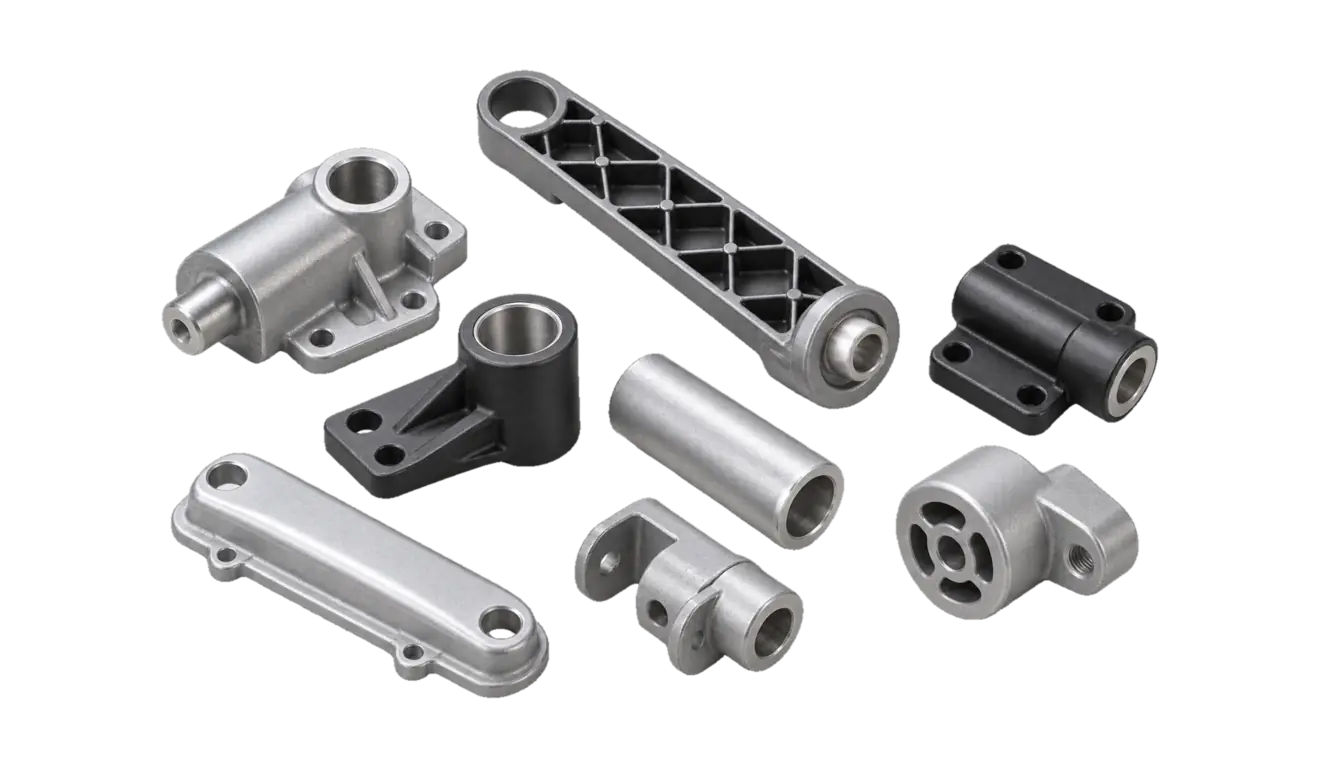
Hot-chamber die casting
Alloys and product range
Alloy choice depends on the part's duty: weight, heat dissipation or corrosion resistance. We work from a drawing or a 3D model, and handle everything from a trial batch to a full production run.
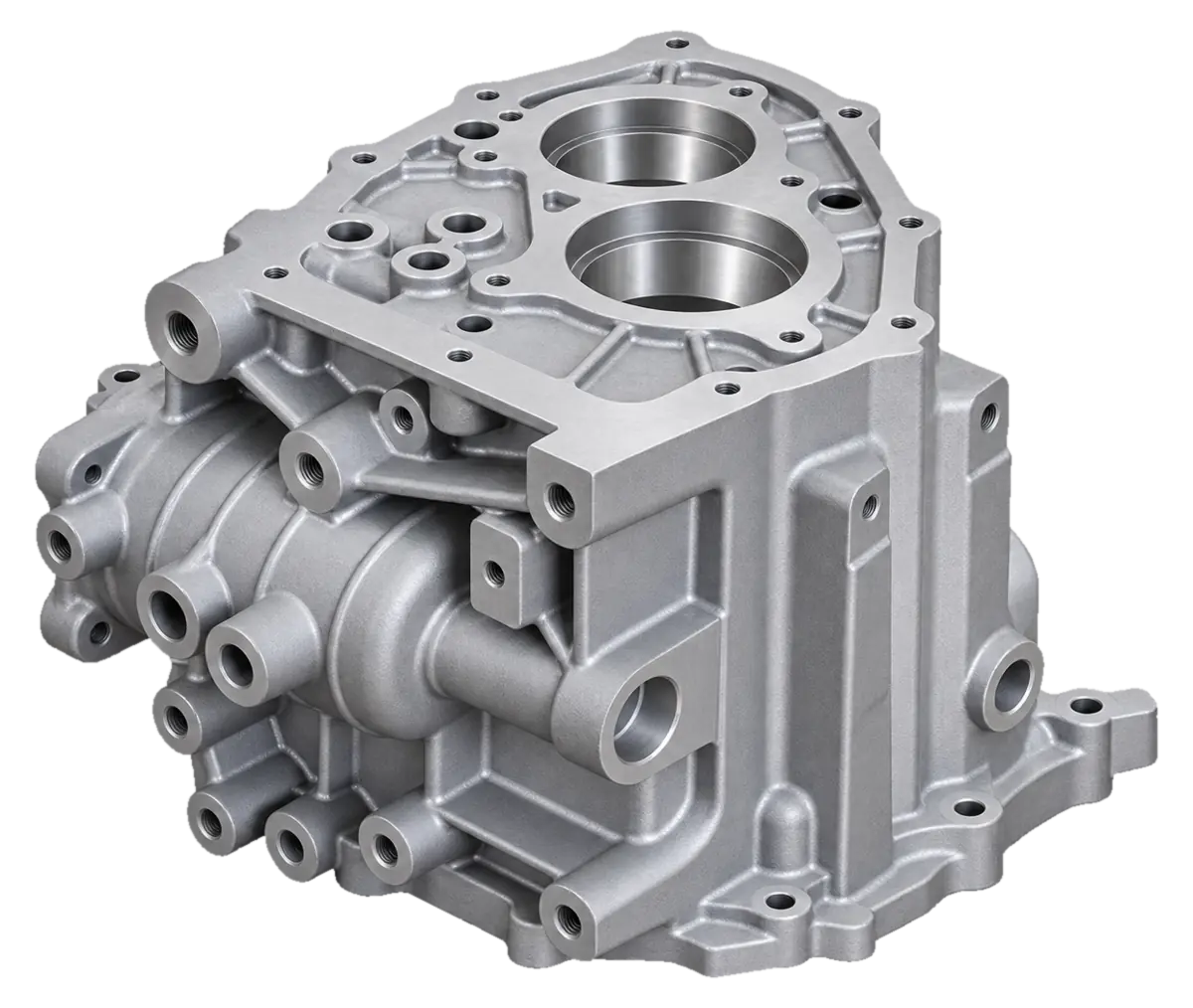
Dies, machining and coatings
We design and build the die ourselves, so we are responsible for the casting geometry from the first batch. From there, the part goes for deflashing, machining and finishing to drawing.
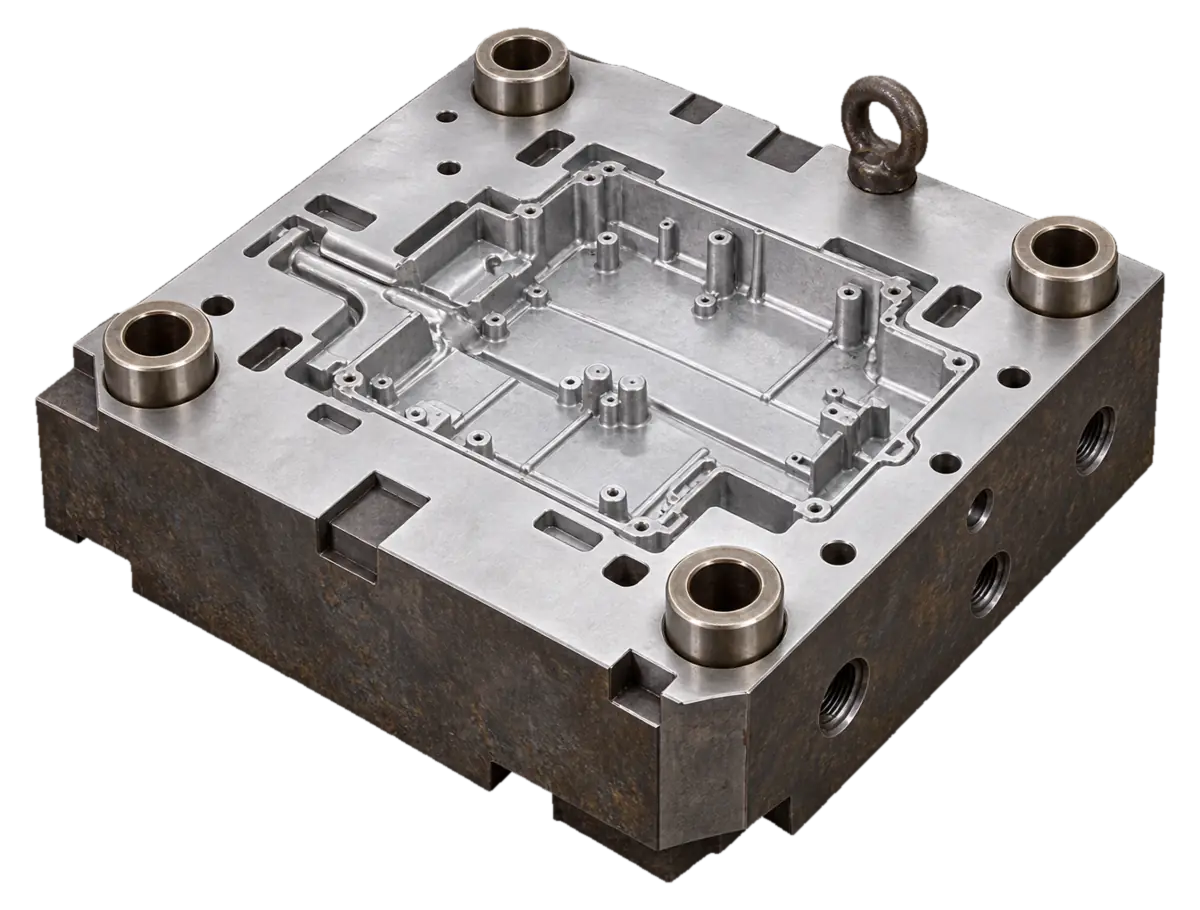
Advantages of die casting
The die produces nearly finished geometry, so the part goes to the machine only for a few critical dimensions. For series parts of complex shape in light alloys, this is usually the cheapest route. Typical uses: automotive components, electronics and electrical housings, heat sinks, industrial equipment, instrumentation, fittings.
01Accuracy and repeatability
The steel die sets the dimensions, so parts from different batches match. Tolerances down to ±0.1 mm.
02Complex geometry
Ribs, bosses and internal cavities are cast in one go. No welding, no assembling the part from pieces.
03Productivity
Cycle time from 30 seconds. A multi-cavity die gives several castings per shot.
04Cost-effective in series
The die pays for itself over a run: the larger the batch, the cheaper each part. Runners go back into the melt.
05Material properties
An aluminium part weighs about a third of a steel one and dissipates heat well.
06Minimal machining
The as-cast surface usually needs no machining and goes straight to painting.
Send us your drawing – we will quote your casting
DXF, STEP, PDF or a photo with dimensions. Reply within 1 working day.